How A Combustion Leak Tester Works
A combustion leak tester checks whether exhaust gases are entering the cooling system. That is why it is so useful when you suspect a blown head gasket, a cracked cylinder head, or another combustion leak that ordinary visual checks cannot confirm.
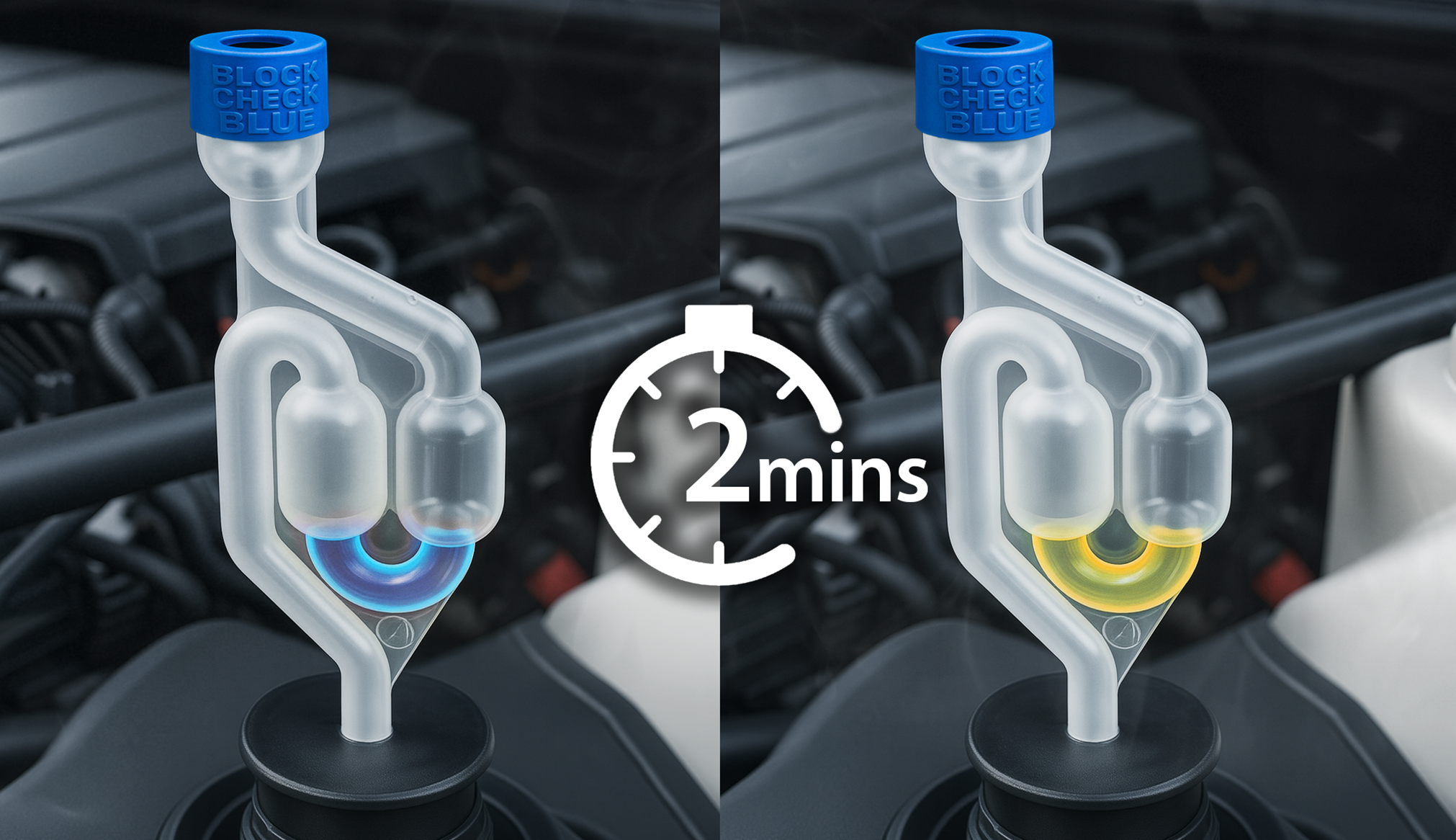
What the tester is looking for
In a healthy engine, combustion gases stay inside the cylinders and exhaust path. If the head gasket seal fails, some of those gases can pass into the cooling system. A block tester samples those gases and pushes them through a reactive fluid so you can see whether combustion by-products are present.
Why the fluid changes colour
The test fluid starts blue. When exhaust gases are present in the sampled air, the fluid moves toward green and yellow. That visible shift is why a combustion leak test kit can be so effective for fast diagnosis compared with relying only on symptoms.
Why a good seal matters
The tester has to sit securely at the filler neck or expansion tank so gases can reach the chambers. If the bung fit is poor, the test can look negative even when the engine problem is real. That is why setup and fitment matter just as much as the fluid.
Why twin-chamber testing helps
A twin-chamber layout helps reduce fluid contamination and makes it easier to read subtle changes cleanly. It is especially useful when you are diagnosing borderline cases and want a more confident read than a single dirty chamber can give you.
Where it fits in the diagnostic process
A combustion leak tester does not replace every other engine test. Compression and leak-down testing still matter in some cases. But when your main question is whether combustion gases are entering the coolant, a block tester is often the fastest place to start.
Use the test properly
Read the step-by-step guide, then use the results guide to make sense of what you see. You can also go straight to the current LeakLogic tester kit.